
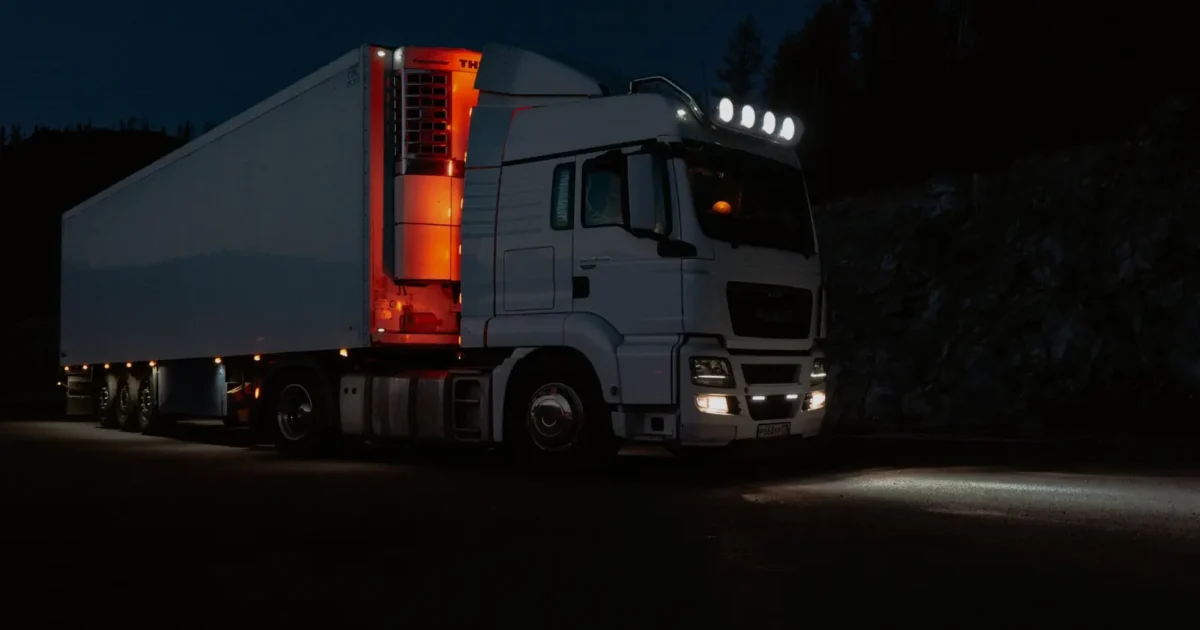
Dry van vs refrigerated is one of the most common equipment decisions in freight. The right trailer protects your cargo, so here is how to tell which one you need.
What is a dry van?
A dry van is an enclosed, non-temperature-controlled trailer. It protects cargo from weather and road conditions and is commonly used for palletized and boxed general freight, such as packaged goods, consumer products and many industrial materials.
What is a refrigerated trailer?
A refrigerated trailer, or reefer, is enclosed and equipped with a cooling unit that maintains a set temperature. It is used for perishable and temperature-sensitive freight, where the product must stay inside a specific range from pickup to delivery.
Quick comparison of the two trailers
| Dry van | Refrigerated | |
|---|---|---|
| Temperature control | No | Yes, set range |
| Typical freight | General palletized goods | Perishable and sensitive products |
| Protection | Weather and road | Weather, road and temperature |
| What to share | Pallets, weight, dock access | Product, temperature range, pre-cooling |
How to choose dry van vs refrigerated
Start with the product itself. These simple rules help most shippers decide:
- If your freight can safely travel at ambient temperature, a dry van is usually appropriate
- If your product has a temperature requirement, ask about refrigerated service
- If you are unsure, check the product’s handling instructions or ask us
- Remember that a cooling unit maintains temperature; it is not designed to cool warm product, so pre-cooling matters
What to tell your carrier
Whatever you decide, share these details when you ask for a quote. Complete information avoids delays and re-quotes:
- The product and the required temperature range
- Whether it is chilled or frozen
- Pallet count, weight and packaging
- Pickup and delivery windows
- Dock hours and appointment requirements
Learn more about dry van and refrigerated freight, then request a quote. You can also look up any carrier on the FMCSA SAFER System, and our freight glossary explains the terms used here.